

02-Oct-2026
Author: Medilivescare
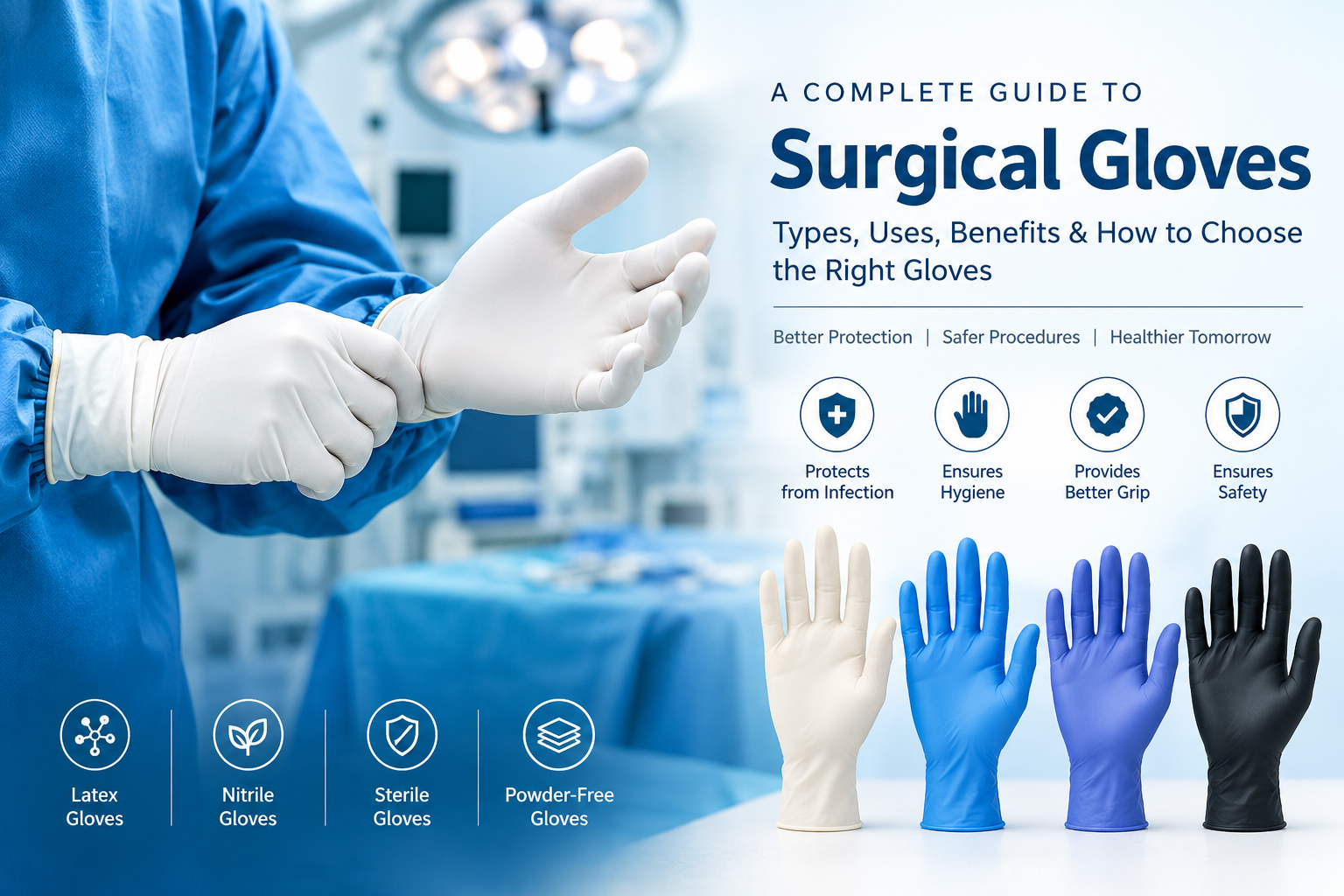
Surgical gloves are an essential part of infection control and personal protection in healthcare environments. They provide a protective barrier between healthcare professionals and patients during surgical procedures, medical treatments, and other clinical activities. Designed for comfort, flexibility, and protection, surgical gloves help support hygienic practices while allowing medical professionals to perform precise procedures effectively. What Are Surgical Gloves? Surgical gloves are medical gloves specifically designed for use during surgical and other sterile procedures. Unlike general-purpose disposable gloves, surgical gloves are manufactured under controlled conditions and are commonly supplied sterile and individually packaged. They are designed to provide a close fit and high tactile sensitivity, which is particularly important during procedures requiring precision. Why Are Surgical Gloves Important? The use of appropriate surgical gloves can support infection prevention and help protect both healthcare workers and patients. Key benefits include: Barrier protection: Helps reduce direct contact with blood, bodily fluids, and other potentially infectious materials. Sterile protection: Sterile surgical gloves are designed for procedures where maintaining a sterile field is essential. Tactile sensitivity: A well-fitting glove allows healthcare professionals to maintain precision during delicate procedures. Comfort: Quality gloves are designed to reduce hand fatigue during extended procedures. Chemical resistance: Depending on the material, some gloves provide resistance to certain chemicals and medical substances. Types of Surgical Gloves 1. Latex Surgical Gloves Latex gloves are made from natural rubber and are known for their elasticity, flexibility, and tactile sensitivity. They have traditionally been widely used in healthcare settings. However, latex may cause allergic reactions in some individuals, so appropriate alternatives may be necessary. 2. Nitrile Surgical Gloves Nitrile gloves are made from synthetic rubber and are a popular latex-free option. They offer good puncture resistance and are suitable for many healthcare applications. Nitrile surgical gloves can be an option for facilities seeking alternatives to natural rubber latex. 3. Powder-Free Surgical Gloves Powder-free gloves are designed without added powder on the inner surface. They are commonly preferred in surgical environments because glove powder can create concerns related to irritation and contamination. 4. Neoprene Surgical Gloves Neoprene is another synthetic material used in some medical and surgical gloves. These gloves can provide a combination of flexibility, chemical resistance, and comfort. What to Consider When Choosing Surgical Gloves Selecting the right surgical gloves involves considering several factors. Material Choose the material according to the intended application, user requirements, and potential allergies or sensitivities. Sterility For surgical procedures requiring a sterile environment, use appropriately sterilized and packaged sterile surgical gloves. Size and Fit A properly fitting glove should provide comfort without being excessively tight or loose. The correct size can also help maintain dexterity and tactile sensitivity. Thickness Different procedures may require different levels of glove thickness. Consider the required balance between protection and sensitivity. Grip and Texture Textured surfaces can help improve grip when handling surgical instruments and other medical equipment. Quality and Standards Healthcare facilities should select gloves from reliable manufacturers and verify that products meet the applicable regulatory and quality requirements for their intended market. Surgical Gloves vs. Examination Gloves Although both are used in healthcare environments, surgical gloves and examination gloves have different intended applications. Surgical gloves are generally designed for sterile surgical procedures and typically have a more precise fit and higher emphasis on tactile sensitivity. Examination gloves are commonly used for routine patient examinations and general medical tasks. The appropriate glove should always be selected according to the procedure and applicable infection-control requirements. How to Properly Use Surgical Gloves Proper glove use is an important part of infection-control practices. Healthcare professionals should follow their facility's established procedures for hand hygiene, glove selection, donning, removal, and disposal. Gloves should be inspected before use, and damaged or compromised gloves should not be used. After a procedure, gloves should be removed carefully to minimize the risk of contamination and disposed of according to applicable healthcare-waste procedures. Conclusion Surgical gloves play an important role in modern healthcare by providing a protective barrier during surgical and sterile procedures. Latex, nitrile, neoprene, and powder-free options offer different characteristics for different applications. When choosing surgical gloves, healthcare organizations should consider material, sterility, size, fit, tactile sensitivity, protection, quality, and intended use. Selecting appropriate gloves from a reliable supplier can help support safe and effective clinical practices. If you are looking for high-quality surgical gloves for hospitals, clinics, distributors, or healthcare facilities, selecting a trusted medical glove manufacturer and verifying the product specifications is an important step.
 India
India
3/9, Ajanta Compound, Site II, Loni Road Industrial Area, Mohan Nagar, Ghaziabad, U.P.-201 007, India.
+91-7838860002
+91-7011919620
Tel.: +91-120 2659330
sales@medilivescare.com